
Keeping your boiling water dispenser clean is the best way to prevent limescale and foul odors. When an under-sink unit sputters, slows to a trickle, or delivers an off-taste, neglected mineral buildup is almost always to blame. Routine upkeep is simple—it just takes the right schedule.
Quick Answer: How to Keep Your Boiling Water Tap Clean and Safe?
Descale the heating tank every 6 to 12 months using food-grade citric acid, replace inline filter cartridges twice a year, and sanitize external taps, drip trays, and spouts regularly to stop microbial contamination. Always isolate power and relieve internal steam pressure before servicing your unit.
Why Routine Cleaning of Your Boiling Water Dispenser Matters
Every boiling water dispenser operates near the vaporization point daily. High heat forces dissolved minerals out of the water, creating chalky scale that blankets internal heating elements and cuts energy efficiency.
Equally important is sanitation around the dispensing spout. Health authorities like Alberta Health Services (AHS) emphasize that drinking water fixtures require regular cleaning to prevent bacterial growth on contact surfaces. At JNOD, we engineer our B28DE 2-in-1 under-sink boiling water dispenser with smart diagnostics to monitor heating cycles. Pairing this smart engineering with clean habits ensures you get pure, 98°C water without foul odors or performance drops!
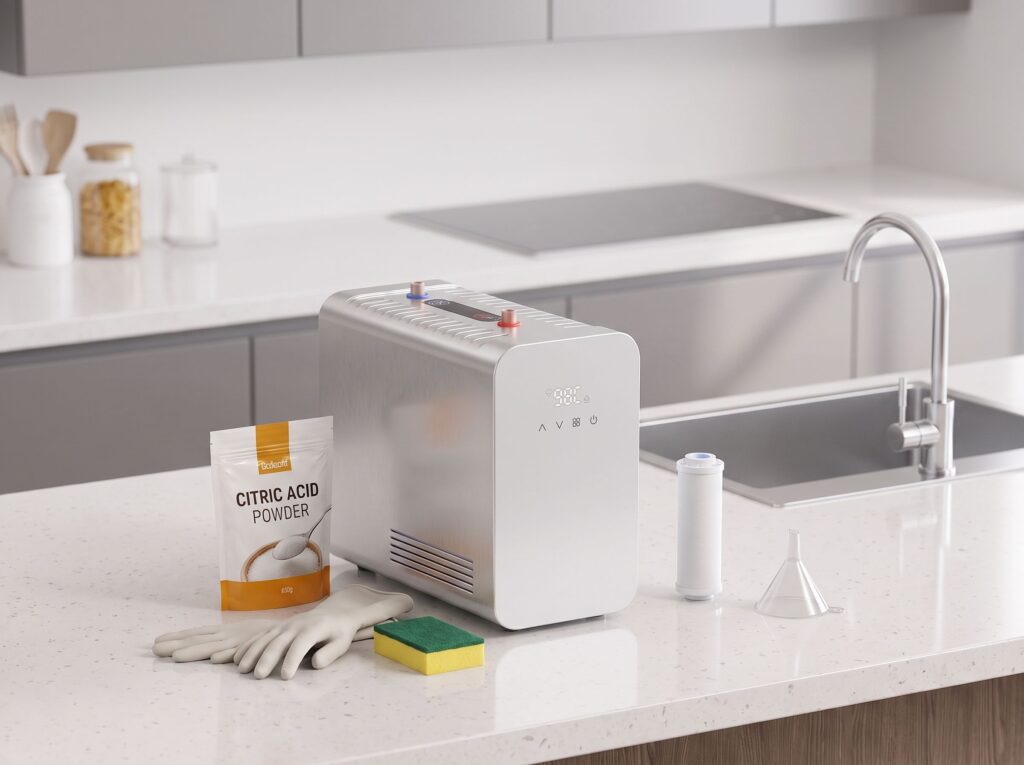
Step-by-Step Guide: How to Descale a Boiling Water Dispenser
Step 1: Power Down, Shut the Valve & Release Pressure
Unplug the boiler inside the cabinet and turn off the cold water angle valve. Open the hot tap until the water runs cold and stops completely—this safely releases internal pressure.
Step 2: Add Citric Acid via the Descaling Port
Mix food-grade citric acid in warm water. Open the top service cap (or disconnect the inlet hose) and pour the mix directly into the tank using a small funnel. Let it sit for 30 to 45 minutes to dissolve hard scale.
Step 3: Drain the Tank & Clean the Tap
Place a small tray inside the cabinet and pull out the bottom drain plug to empty out all dirty water. Wipe down the tap body, handle, and nozzle with a clean damp cloth to remove germs.
Step 4: Reconnect, Fill, and Flush
Tighten the plug and turn the water valve back on to fill the tank before plugging in the power. Run cold and hot water through the tap for 2 to 3 minutes until the water is completely clear and fresh.
Maintaining the Filter on Your Boiling Water Dispenser
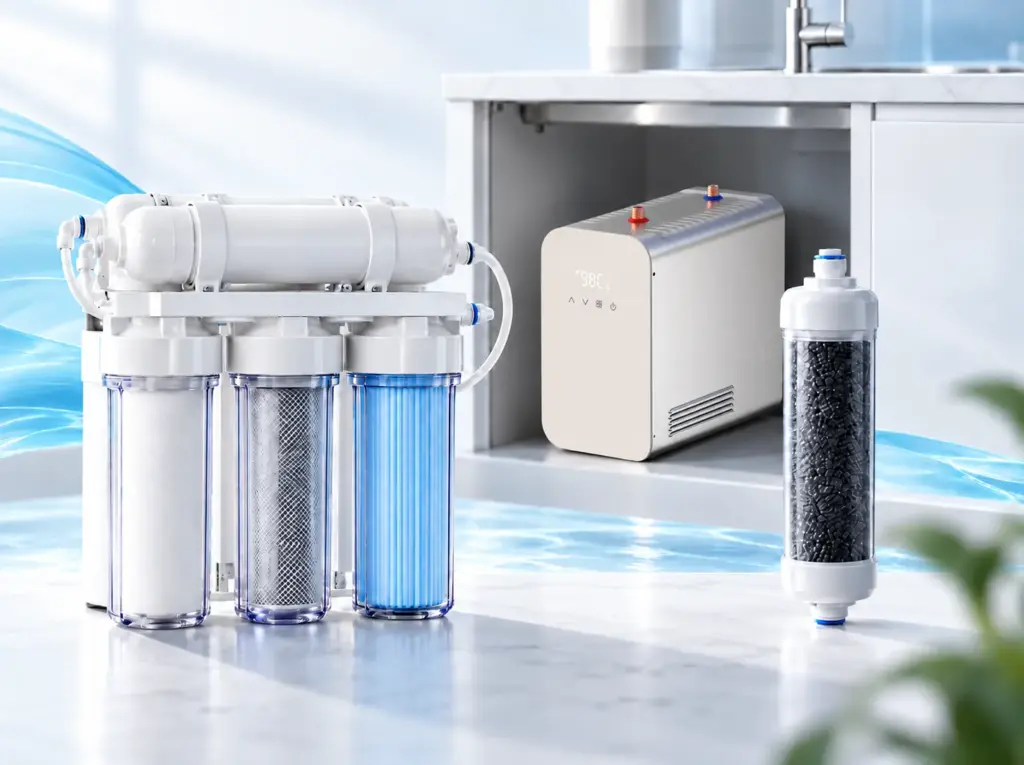
Inline carbon and scale-inhibitor filters trap chlorine, rust, and heavy sediments before water enters the boiling core. Replace your filter cartridge every 6 months to maintain optimal flow and protect the pump seals.
Care Checklist: Daily, Monthly, and Annual Maintenance
| Component / Area | Recommended Action | Maintenance Interval |
| Faucet Spout & Aerator | Wipe surface clean and soak mesh to remove mineral crust | Monthly |
| Drip Tray & Casing | Wash with warm soapy water to prevent mold buildup | Bi-Weekly |
| Inline Water Filter | Replace composite filtration cartridge | Every 6 Months |
| Boiler Tank & Heating Core | Perform full citric acid descaling cycle | Every 6–12 Months |
| Plumbing Lines & Seals | Inspect fittings and valves per WRAS Water Fittings Guidelines | Annually |
FAQ
Can I clean my boiling dispenser with household chlorine bleach?
Bleach is strongly discouraged for internal boiler tanks. Bleach corrodes stainless steel heating elements and leaves toxic fumes behind; food-grade citric acid is far safer and more effective on limescale.
Why is my dispenser sputtering steam and dripping?
Spitting and erratic dripping usually indicate a scale-choked aerator or an overpressurized tank. Descaling the tank and clearing the nozzle mesh immediately restore smooth laminar flow.
Do I need to remove the whole under-sink tank to descale it?
No. Most modern under-sink boiling units feature an accessible top descaling inlet or flexible push-fit connections. You simply isolate the under-sink angle valve, pour in the solution using a funnel, and drain without dismounting the entire bracket.
How do I know when it is time to change the filter?
A sudden reduction in flow speed or a change in water taste indicates the filter bed is saturated. Smart dispensers like our JNOD B28DE series track total water volume and notify you directly on your phone via the Tuya app when a replacement is due.
Elevate Your Kitchen Water Projects with JNOD
Regular maintenance keeps your boiling water dispenser running efficiently and extends its service life by years. JNOD designs commercial-grade and residential under-sink instant boiling water systems, smart taps, and multi-temperature dispensers built for seamless maintenance and long-lasting durability.
Looking to source reliable boiling water dispensers for your appliance brand or distribution network? Contact the JNOD technical team today for OEM/ODM consultation, product catalogs, and sample requests.
 English
  Arabic
  Russian
  Spanish