
If your sparkling water dispenser is not fizzy enough, an empty CO₂ cylinder may be your first suspect. However, water temperature, CO₂ supply, water flow and recovery time also affect carbonation.
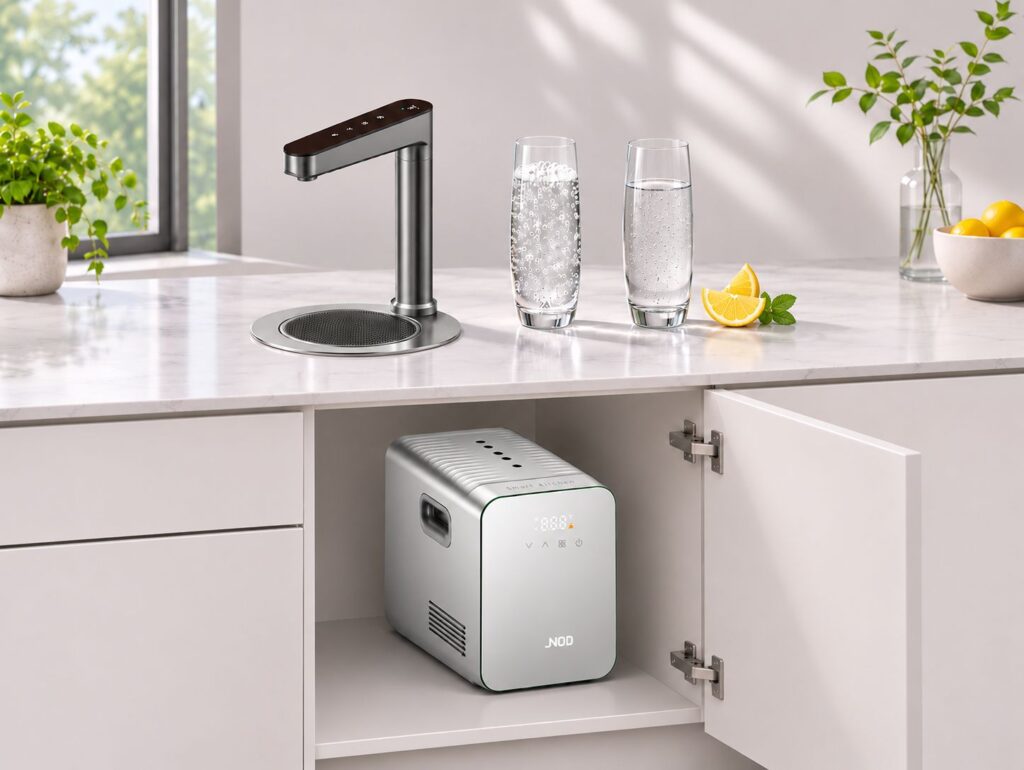
At JNOD, we develop chilled and sparkling water dispensers that integrate refrigeration, carbonation and water delivery. Understanding how these functions work together makes troubleshooting easier.
Respuesta rápida: Warm, less fizzy water often suggests a cooling problem. Cold but nearly flat water points more strongly toward the CO₂ supply or carbonation system. If carbonation weakens after several consecutive glasses, your dispenser may need more recovery time.
Sparkling Water Dispenser Not Fizzy? Start With the Symptoms
Use the following table to identify the most likely cause of weak carbonation.
| What You Notice | Possible Cause | What to Examine |
|---|---|---|
| Warm water with weak carbonation | Insufficient cooling | Water temperature and ventilation |
| Cold water with little or no carbonation | CO₂ supply issue | Cylinder and gas delivery |
| Carbonation weakens after several glasses | Insufficient recovery time | Cooling and carbonation capacity |
| Slow or irregular water flow | Restricted water supply | Inlet water and filtration |
| Weak carbonation after a cylinder change | Connection or startup issue | Recent cylinder replacement |
| Unusually high CO₂ consumption | Gas leak or component fault | Gas circuit and operating records |
1. Water Temperature Is Too High
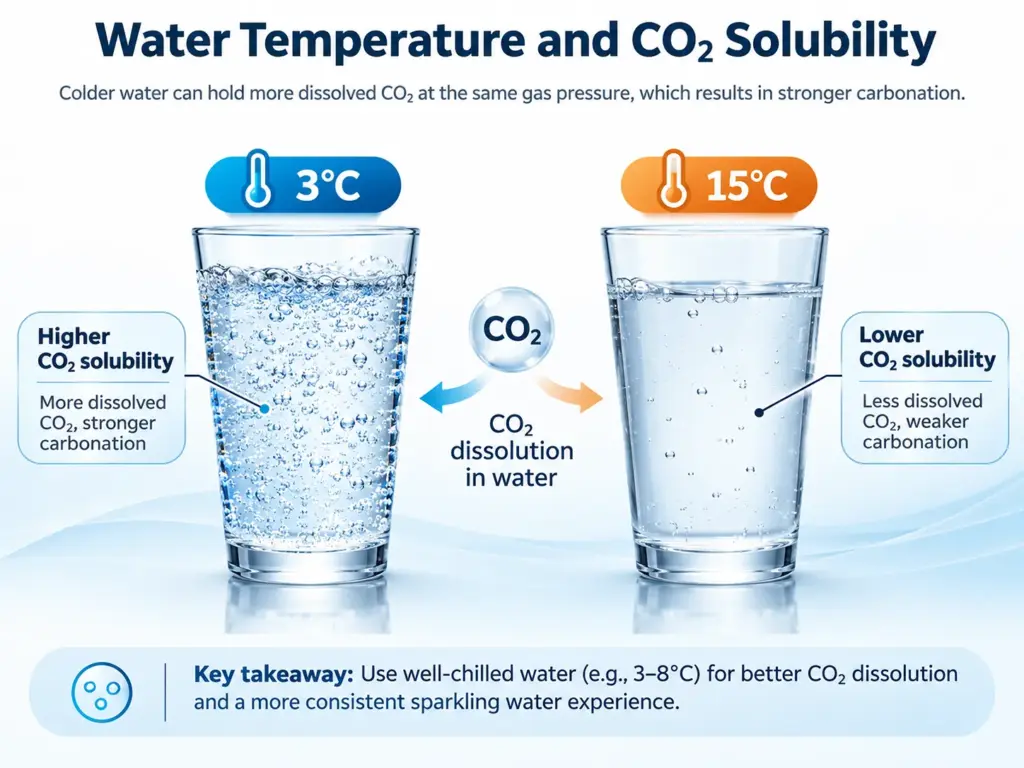
Water temperature directly affects CO₂ solubility. At the same gas pressure, colder water can hold more dissolved CO₂ than warmer water.
En University of Florida’s guide to carbonating beverages explains this relationship between temperature, pressure and carbonation.
Nuestra JNOD SC27-series chilled and sparkling water systems include configurations with adjustable chilled-water temperatures from 3°C to 15°C.
Effective cooling provides favorable conditions for carbonation. If the water entering the carbonation system becomes too warm, maintaining the desired carbonation level becomes more difficult.
What to Do
Compare your chilled still water with your sparkling water. If both are warmer than usual:
- Measure the actual outlet water temperature.
- Keep the cabinet ventilation openings clear.
- Allow the dispenser to recover after heavy use.
- Observe whether normal cooling and carbonation return.
At JNOD, we design our chilled and sparkling water systems with cooling and carbonation as connected performance requirements.
2. The CO₂ Supply Is Insufficient
If your water is cold but nearly flat, the CO₂ supply is a likely area to investigate.
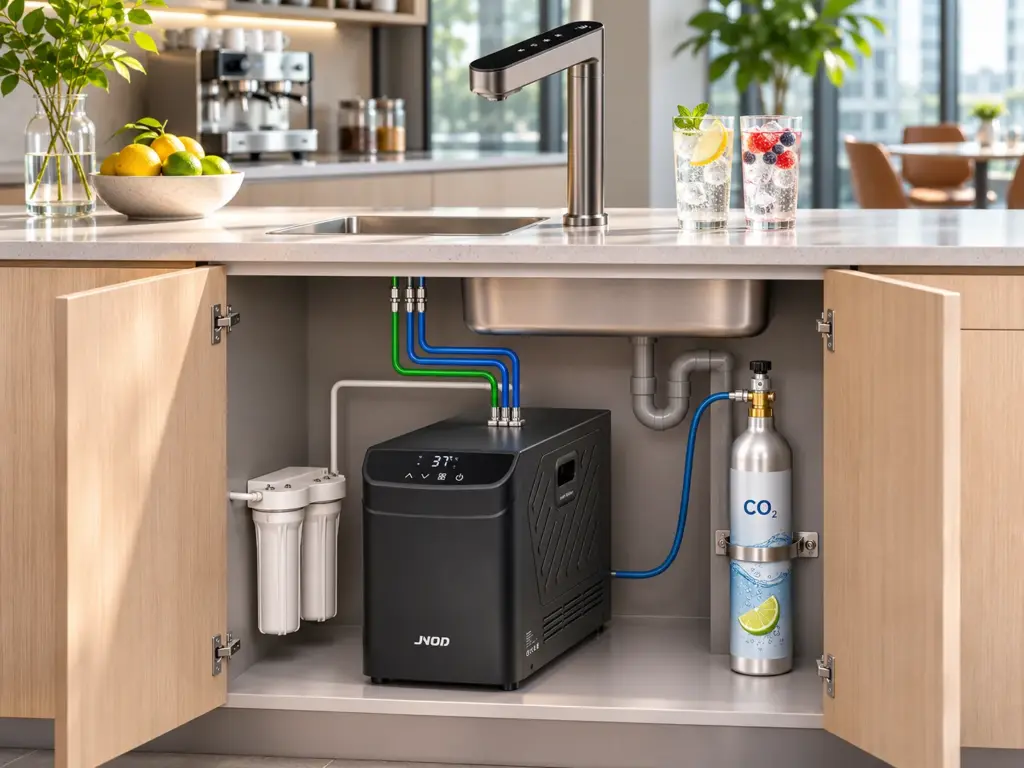
A sparkling water dispenser uses food-grade CO₂ supplied through a compatible cylinder and pressure regulator. Without sufficient gas delivery, the equipment cannot maintain normal carbonation.
A sudden loss of carbonation may indicate an exhausted cylinder or an interruption in gas supply.
At a stable temperature, cylinder pressure remains relatively constant while liquid CO₂ is present. Therefore, cylinder pressure alone does not reliably indicate how much CO₂ remains.
Weak carbonation immediately after a cylinder replacement may also indicate a connection or startup issue.
What to Do
Review your cylinder replacement history and average sparkling water consumption. This can help you estimate whether the gas supply is nearly exhausted.
Nuestra CO₂ cylinder lifespan guide explains how to calculate cylinder output, replacement intervals and gas costs.
If carbonation does not return after a correctly completed cylinder replacement, qualified service personnel can examine the regulator, gas connections and carbonation equipment.
3. Inlet Water Flow or Pressure Is Inadequate
The carbonation system needs a suitable incoming water supply. A clogged filter, restricted water line or insufficient inlet pressure can interfere with filling and dispensing.
Water pressure may also decrease when several fixtures operate at the same time.
Weak carbonation combined with slow or irregular water flow can indicate a water-supply problem.
What to Do
Compare the sparkling water flow with the dispenser’s other water functions.
- If several water functions have reduced flow, examine the incoming water supply and filter condition.
- If chilled still water flows normally but sparkling water does not, the problem may be within the carbonation or sparkling-water delivery circuit.
Water inlet pressure and CO₂ gas pressure are different operating parameters. Increasing CO₂ pressure will not correct an inadequate incoming water supply.
Our guide to how an under-counter sparkling water dispenser works explains how these components work together.
4. Carbonation Weakens After Consecutive Dispensing
Does your dispenser produce a fizzy first glass but weaker carbonation after several consecutive glasses?
Your dispenser may not have enough time to cool and carbonate fresh water between glasses.
During use, the system delivers prepared water while replenishing, cooling and carbonating the incoming supply. Heavy use over a short period places greater demand on these functions.
JNOD SC27-Series: A Practical Example
Our SC27DU-E and SC27DE-E chilled and sparkling water dispensers have the following published specifications:
| Especificación | SC27DU-E / SC27DE-E |
|---|---|
| Chilled-water tank | 2.7 L |
| Carbonation tank | 1.0 L |
| Published sparkling water output | 2.7 L/10 min |
| Adjustable chilled-water temperature | 3–15 °C |
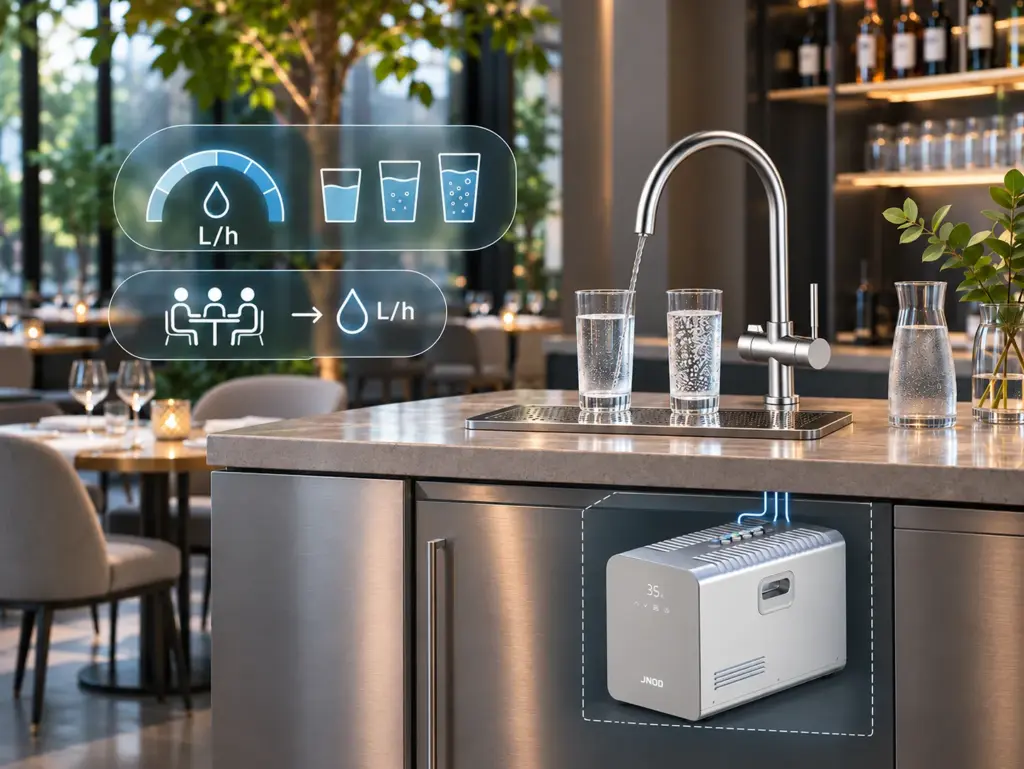
Consider an office where employees need ten 250 mL glasses of sparkling water.
10 glasses × 0.25 L = 2.5 L
The total water demand is the same, but the required average flow changes with the service period.
| Service Period | Total Demand | Average Demand Flow |
|---|---|---|
| 2 minutes | 2.5 L | 1.25 L/min |
| 10 minutes | 2.5 L | 0.25 L/min |
Serving the same amount of water within two minutes creates five times the average demand flow compared with serving it over ten minutes.
This example illustrates why commercial equipment selection requires more than checking tank capacity.
Our published 2.7 L/10 min sparkling water output provides a reference for short-term demand. However, tank capacity, dispensing flow and carbonation production capacity are different performance indicators.
The calculated demand flows above describe the application, not the dispenser’s measured flow rates.
What to Do
Compare carbonation performance under two conditions:
- After recovery: Dispense a glass when the system has returned to its normal operating temperature.
- During heavy use: Observe the water temperature and carbonation after several consecutive glasses.
If carbonation returns after recovery, your usage pattern may be placing greater demand on the equipment than it can consistently support.
For restaurants and other busy commercial environments, our restaurant water dispenser sizing guide explains how to calculate peak-hour demand.
5. Gas Leaks or Component Faults
When water temperature and flow are normal, weak carbonation may result from a fault within the gas or carbonation circuit.
Possible causes include gas leaks, regulator faults, valve malfunctions and problems with carbonation components.
An unexpected increase in CO₂ consumption is another useful sign.
For example, if your business dispenses the same amount of sparkling water each week but replaces cylinders more frequently, a gas leak or abnormal gas consumption may be the cause.
What to Do
Keep a record of cylinder replacement dates, sparkling water consumption and changes in carbonation quality.
If you suspect a CO₂ leak, stop using the system and arrange professional servicing. If a significant leak is suspected or a CO₂ alarm activates, leave the affected area and follow the site’s emergency procedures.
En British Compressed Gases Association’s beverage dispense gas guidance provides further information on gas safety.
6. Sparkling Water Loses Carbonation After Dispensing
Sometimes your dispenser works normally, but the water loses carbonation after entering the glass.
When sparkling water leaves a pressurized system, dissolved CO₂ begins to escape. Warmer serving conditions, agitation and extended standing time can accelerate this process.
Compare freshly dispensed water at similar temperatures and under similar serving conditions.
If the water tastes properly carbonated immediately after dispensing but becomes flat later, the issue may be related to serving conditions rather than the dispenser itself.
How JNOD Supports Distributors and OEM/ODM Partners
Consistent sparkling water performance requires a balance between cooling capacity, carbonation output and water delivery.
At JNOD, we consider these requirements together when developing drinking water systems for residential and commercial applications.
When you contact our technical team about weak carbonation, the following information helps us narrow down the problem:
- Equipment model: Model number and any displayed fault codes.
- Water temperature: Actual chilled and sparkling water outlet temperatures.
- Dispensing performance: Changes in water flow and carbonation during consecutive use.
- Service history: Recent cylinder or filter replacements.
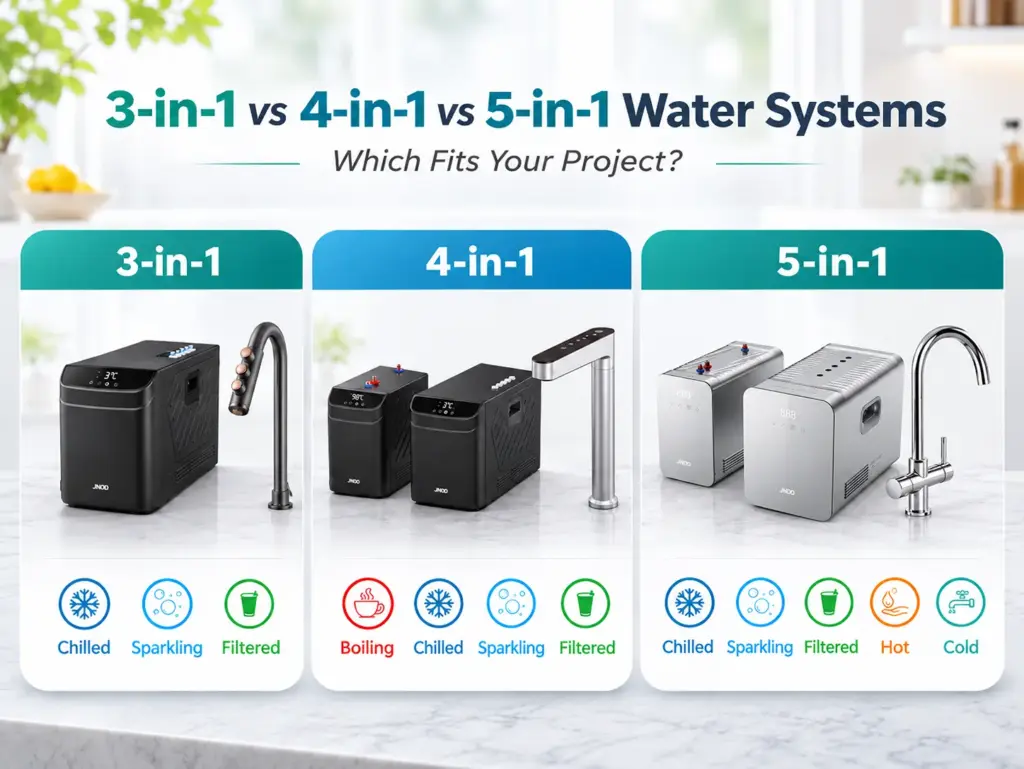
For customized projects, we also consider refrigeration capacity, carbonation components, faucet configurations and expected water demand.
Through our OEM/ODM services, we work with distributors and brand partners to develop water dispensing solutions for different markets and applications.
How to Fix a Sparkling Water Dispenser That Is Not Fizzy Enough
If your sparkling water dispenser is not fizzy enough, start with water temperature, CO₂ supply, water flow and recovery performance. Identifying the cause helps avoid unnecessary component replacement and service interruptions.
Contactar con JNOD for technical support, product information or a chilled and sparkling water solution for your next project.
 English
 Arabic
 Russian
 Spanish